|
 |

















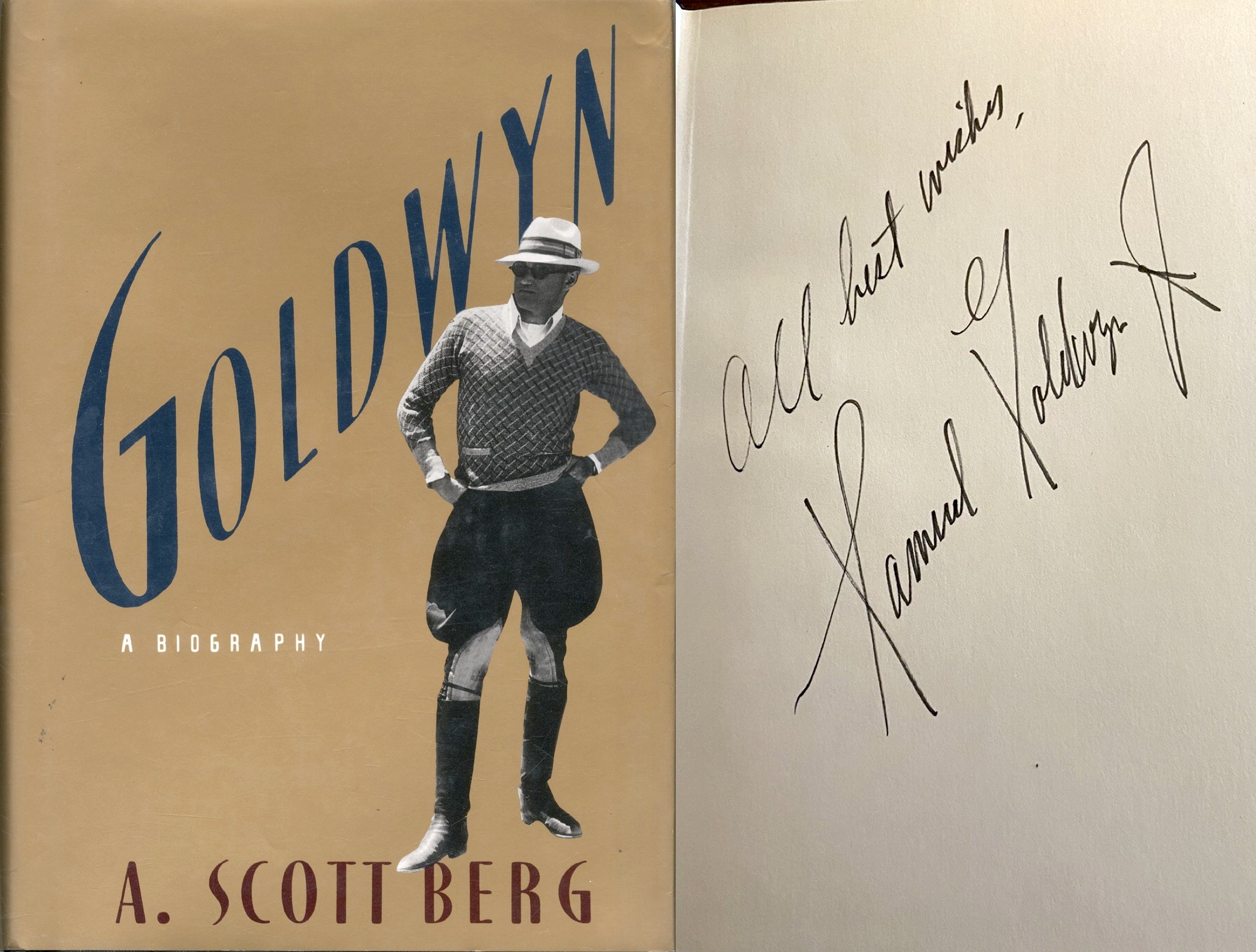
 The Samuel Goldwyn Company, Inc., was an American independent film company founded by Samuel Goldwyn Jr. (7 Sep 1926 - 9 Jan 2015), the son of the famous Hollywood mogul, Samuel Goldwyn (born Szmuel Gelbfisz: 17 Aug 1879 - 31 Jan 1974). Sam, Sr. was best known for being the founding contributor and executive of several motion picture studios, and was awarded the Golden Globe Cecil B. DeMille Award (1973), the Irving G. Thalberg Memorial Award (1947), and the Jean Hersholt Humanitarian Award (1958). His Samuel Goldwyn Writing Awards, bestowed annually starting in 1955, was a competitive writing prize open to all University of California students. While winners were unknown students when they received the award, many went on to be prominent writers and filmmakers, including Francis Ford Coppola, Allison Anders, Carolyn See, Eric Roth, James Robert Baker, Jonathan Kellerman, Steve Erickson, Colin Higgins, Pamela Gray, Carroll Ballard, and Scott Rosenberg.
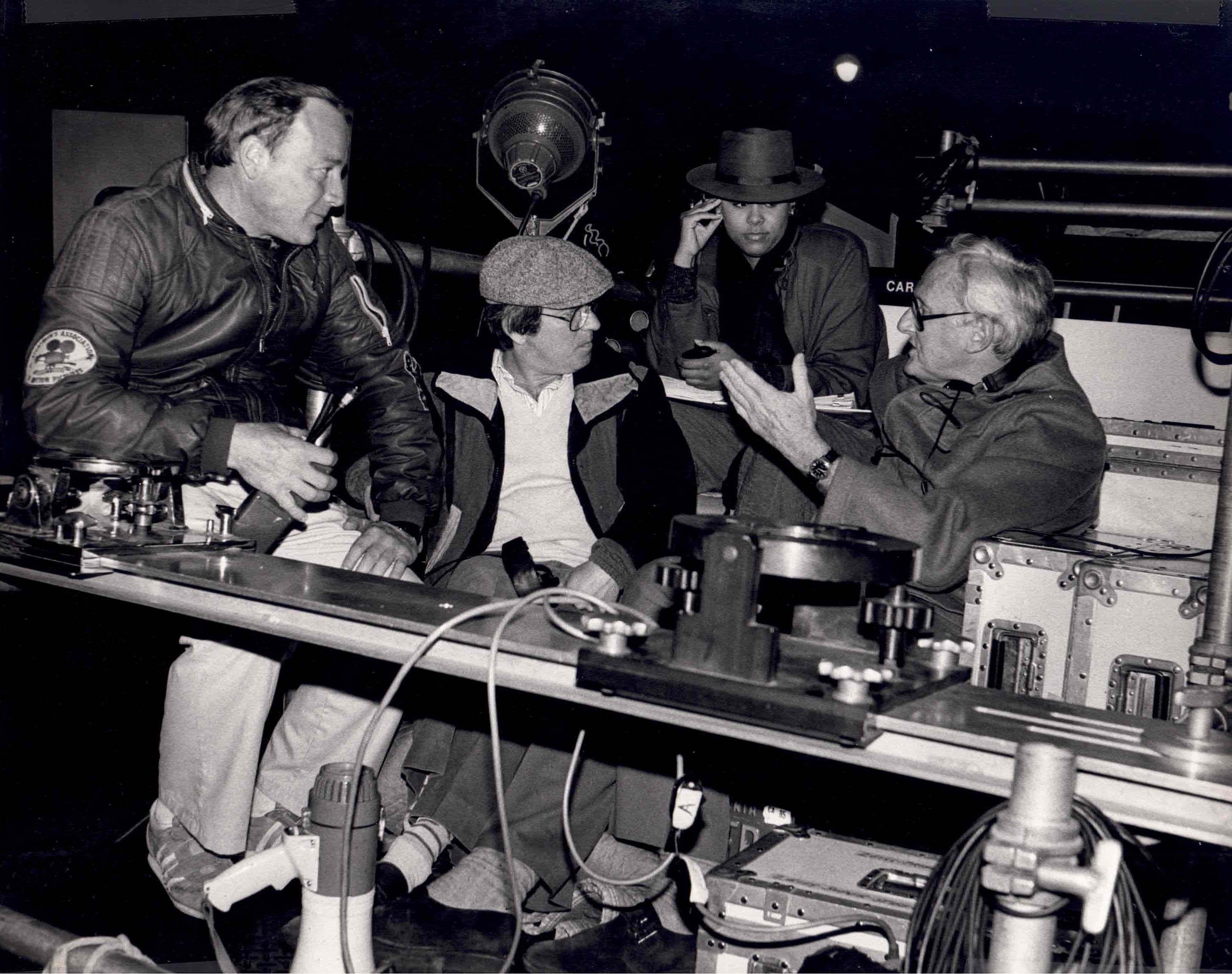
When Goldwyn, Sr. passed away in 1975, Sam Jr. took over the company and was dedicated to preserving the integrity of Goldwyn Sr.'s ambitions and work. "Sammy" (Jr.) built the company up from a catalogue of 52 classic films, including John Ford's The Hurricane (1937), and William Wyler's films Dodsworth (1936), Dead End (1937), Wuthering Heights (1939), The Little Foxes (1941) and 7-Oscar winner The Best Years of Our Lives (1946). Sam Jr. then turned the company into one of the most significant distributors of independent art-house films during the 1980s and 1990s. (It seems strange to say this about a company that was producing Once Bitten at the same time, but it's true!) Over the next ten years, Sam Jr. increased the catalogue almost tenfold, adding and distributing international films like David Lynch's Palme d'Or winner Wild at Heart, Jim Jarmusch's Stranger Than Paradise, Bill Forsyth's Gregory's Girl, Alex Cox's Sid and Nancy, Stephen Frears' Prick Up Your Ears, Robert Townsend's Hollywood Shuffle, John Sayles' City of Hope, Ang Lee's The Wedding Banquet and Kenneth Branagh's Much Ado About Nothing. The Company began adding original productions to their roster as well in 1983, starting with The Golden Seal, followed by Once Bitten in 1985, and Mystic Pizza in 1988, giving Jim Carrey and Julia Roberts their first big breaks.¹
In succeeding years, the Samuel Goldwyn Company was able to obtain the rights to all films produced under the elder Goldwyn's supervision, including the original Bulldog Drummond (1929), Arrowsmith (1931), and Guys and Dolls (1955). The company also acquired distribution rights to several films and television programs that were independently produced but released by other companies, including Sayonara, the Laurel & Hardy-starring vehicle Babes in Toyland (1934), the Flipper TV series, the Academy Award-winning Tom Jones (1963), and the Rodgers and Hammerstein film productions of South Pacific (1958) and Oklahoma! (1955), as well as the CBS Television adaptation of Cinderella (1965). The company's animated films include Swan Lake, Aladdin and the Magic Lamp, The Care Bears Movie, The Chipmunk Adventure and Rock-a-Doodle. Among the television programs in the Goldwyn company's library are the television series American Gladiators and Steve Krantz's miniseries Dadah Is Death.
In 1990, Heritage Entertainment, Inc., and Goldwyn attempted to merge,² but the plans fell apart while Heritage went through a Chapter 11 bankruptcy. The merger did allow Goldwyn to inherit the Landmark Theatres chain, which was a unit of Heritage, and the company went public as Samuel Goldwyn Entertainment in 1991. But the movie industry had changed, and independent-minded film companies began getting swallowed up by larger corporations. Faux-Indie studios like Miramax (funded by Disney) and New Line (funded by Turner Broadcasting) began overtaking over the Independent film market, with deeper pockets of advertising and promotional money from their major studio benefactors. So in 1995, the Samuel Goldwyn Company—as well as its chain of theaters, and its library of 850 films and 700 television episodes—went up for sale.³ On July 2, 1996, the company and its library were acquired by Metromedia for $125 million. To coincide with the purchase, the Samuel Goldwyn Company was renamed Goldwyn Entertainment Company, and was reconstituted as a subsidiary of Metromedia's Orion Pictures unit. That year, more changes occurred when both Orion and Goldwyn became part of the Metromedia Entertainment Group (MEG). Goldwyn became the specialty films unit, though they would seek out films with crossover appeal. While Orion and Goldwyn would share the overhead costs, it was agreed that the production/acquisition operations would operate independently from each other.⁴
In 1997, Metromedia sold its entertainment group to Metro-Goldwyn-Mayer (Goldwyn Pictures was originally merged into Metro Pictures Corporation in 1924, becoming Metro-Goldwyn-Mayer—but despite the name in the title, neither Samuel Goldwyn Sr. or Jr. were ever connected MGM before this sale). The Goldwyn Entertainment Company was renamed Goldwyn Films and operated as MGM's specialty films unit. A month later, Samuel Goldwyn Jr. sued MGM and Metromedia, claiming that he was abruptly let go of the company despite promises that he would continue to run it under different ownership.³ Another concern in the lawsuit was the use of the Goldwyn name, with the defendants being accused of "palming off specialized films produced or acquired by" the unit as though the plaintiff was still involved in its management. Goldwyn Films changed its name to G2 Films in January 1999 as part of the settlement. In July 1999, G2 Films was renamed United Artists International, used as the studio's arthouse film producer/distributor.
Meanwhile, Samuel Goldwyn Jr. went on to found Samuel Goldwyn Films. This successor company has continued to release independent films such as What the Bleep Do We Know!? and the Academy Award-nominated The Squid and the Whale. Until his passing in 2015, Samuel Goldwyn owned sole rights to the use of the name and signature logo as part of the settlement of his 1999 lawsuit against MGM. The company is currently headed by his son, Peter Goldwyn. Since then the company has handled films like Another Round (2020), the Oscar winner for Best International Feature Film, Lunana: A Yak in the Classroom (2019), an Oscar nominee for Best International Feature, and In the Land of Saints and Sinners (2023) an action-thriller starring Liam Neeson. MGM now holds much of the original Goldwyn Company's holdings (including Once Bitten).
Another of Sam Jr.'s sons, John Goldwyn (himself a producer), said of his father: "He evoked his father quite a lot. He worshipped him and I guess chafed under him as well. But he shouldered the great legacy with a sense of style and great humor. He was born with a job to perpetuate the legacy of what they created. He did that very capably. It was a big job. He also created his own identity and left an indelible mark on Hollywood, first doing the specialty business and understanding there was a hole that no one filled."⁵

Film Title Sequence Designs and Adventures of Dan Perri.
Quite early in my career I worked on many independent non-studio films. Along the way I worked with an old time publicist who had been in the business for a very long time.
This guy had worked for the original Sam Goldwyn at The Goldwyn Studios as his personal publicist for many years. Well, when the famed movie mogul died in 1974, the industry wondered what would become of his film studio in the heart of Hollywood.
There was rumor that Goldwyn's son, Sam Jr. wasn't interested in running the company, so, in early 1975 it was a surprise when Sam Jr. did take over his father's storied film studio and moved into his huge, second story corner office overlooking Santa Monica Blvd. in Hollywood.
So, it was there that I was summoned to a meeting at by Mr. Goldwyn Sr's old time publicist to meet Sam Jr. and offer design ideas for a new, modern Samuel Goldwyn Studios film logo that would be at the beginning of all Goldwyn releases.
After a brief and pleasant greeting and quick once over, Sam Jr. gave me the green light to bring him some ideas on how to represent his dad's company in the 1970s, effectively updating the old, somewhat stodgy formal type treatment that was the Goldwyn logo since the late 1930s.
The following week I came storming into his office with a whole pack of different ideas. Original and modern and—in my mind—great solutions to his unique problem.
Well, after exhaustive pitches and descriptions on how to treat each idea on the screen it became clear that Sam Jr. didn't seem to want contemporary modern ideas because he had rejected every single one that I'd presented to him.
With shared disappointment he thanked me and I turned to the door to leave. But, just as I approached the door an idea stopped me in my tracks. I threw it over my shoulder in a rapid fire description thinking that he could use it without any of my involvement, since to me it seemed so simple and by this time obvious. That was to see Samuel Goldwyn's signature being written on the screen.
Sam suddenly lit up. He loved it and immediately asked me to go and design it and bring it back. Excitedly, I shot out of there and went back to my little, tiny office nearby to create this title treatment that was to live on to this day and still be used by The Samuel Goldwyn company.
I returned with all of these storyboards. Different ideas seeing an elegant fountain pen come into frame and smoothly glide across the screen leaving behind a fountain pen script of the signature. Another of seeing a hand holding a fountain pen move into frame and write the name across the screen.
With each idea I would always start by referring to Sam's dad's signature and how it would come on. But as soon as I mentioned Sam's dad, Sam Jr. grabbed my arm and stopped me. Almost angrily he said, "Wait a minute, Dan, this isn't going to be my Dad's signature, this is going to be MY signature."
Suddenly I realized why he was so high on the signature idea. It would allow him to put his own actual stamp on the company. And it would modernize and perpetuate his father's name all at the same time. It was a perfect design solution.
We finally arrived at the essence of the concept: a simple, white, elegant script that invisibly writes on the name in smooth, real-time strokes from an invisible pen.
When I returned to receive the actual signature to animate the finished film title from, Sam handed me a big stack of pages. I saw where he had written his name over and over until he got how he wanted it to look. Together we chose the final version and I went off to create the film elements to film the final screen version.
Since it was to be on the screen as its primary application, it had to be white against a black screen. This was done because of how the beginning of film reels usually gets very scratched and if it were black on white it would soon look like black on a field of little hairy scratches and endless bits of dirt. White on black would also be much more elegant. As it turned out, Sam opted for a medium dark blue background, instead.
I hand animated each frame with a series of 'reveal' mattes laid over a film cel of the actual signature, backlit photographed on an animation camera stand.
After creating the actual film elements I then had to create a theatrical widescreen version, a normal 16:9—originally known as 1.85—theatrical version and a television version—known as 1.33—of the logo so it could be integrated into both old and new films and TV versions.
Sam also wanted a full complement of printed materials for office use proudly displaying his actual signature. I have always been very pleased with its usage and Sam—until his death—never failed to thank me for creating it every time I saw him.
(Dan Perri has been designing titles for major motion pictures for decades. He has designed hundreds of titles for the most influential films that have now become iconic and is still an active designer. From 'Star Wars' to 'In the Valley of Elah', Dan continues to shape the industry title sequences.)
NOTES ON THIS PAGE
¹—Dagan, Carmel (January 9, 2015 8:52PM PT). "Samuel Goldwyn Jr. Dies at 88". Variety. (Pat Saperstein contributed to this report.)
²—Glover, Karen (September 23, 1991). "Goldwyn, Heritage Entertainment merging (Samuel Goldwyn Co.)". Los Angeles Business Journal. 13 (38): 50.
³—Bates, James (30 October 1997). "Goldwyn Suing Metromedia, MGM Over Firing, Contract". Los Angeles Times. Retrieved July 21, 2017.
⁴—Higgins, Bill (January 10, 1999). "G2 Films emerges as Goldwyn, MGM settle". Variety.
⁵—Foreman, Liza (January 20, 1999; updated April 14, 2017). "Farewell to a Tinseltown Original: In Memory of Samuel Goldwyn Jr.". The Daily Beast.
 |
|
 |
|
|