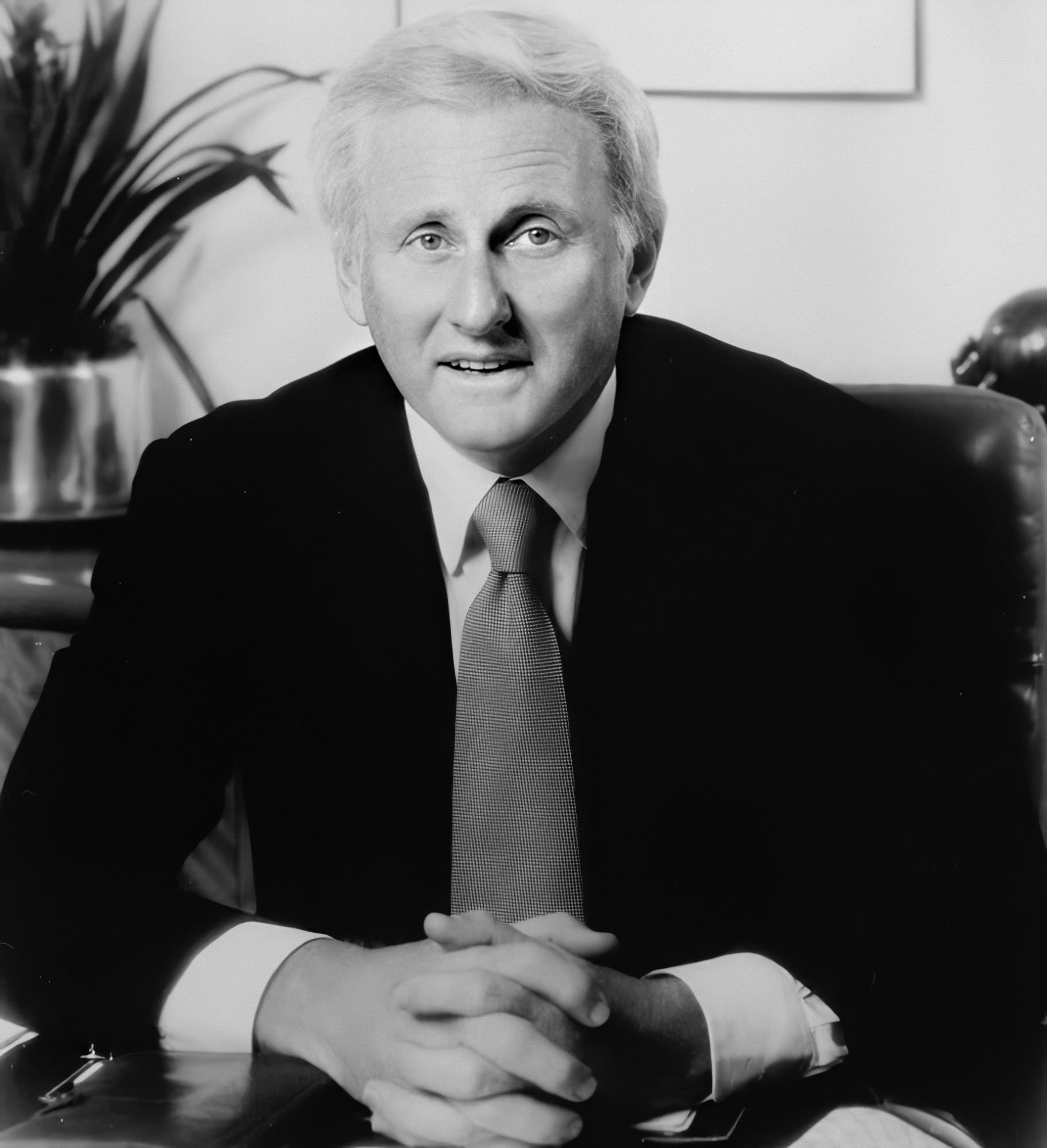
Samuel John Goldwyn (1926-2015)
In 2016, I watched my hero get memorialized on the Oscars, in that long sad roll call that lists everyone associated with the movie industry who died in the previous year. Well, not everybody: I'm never going to be mentioned at that ceremony, either in the memorial section or for any of the movies I was ever involved in. But Samuel Goldwyn Jr. was, and deserved to be. He had been involved in many great films. He had discovered Jim Carrey (for Once Bitten) and Julia Roberts (for Mystic Pizza). He did everything in his storied career: He made documentaries; he directed; he produced; he ran the whole studio; he even produced the Oscars ceremony itself for a couple of years. But I was celebrating his life that night for a more personal reason.
Sam had discovered me, too—just like Jim and Julia—way back in 1983. I was attending Long Beach State University without any career direction. Sam made that decision for me: He was buying a screenplay I'd co-written and wanted me to be available for rewrites. When I announced in the meeting that I was still a junior in college and had a dorm room paid for until January, Sam quietly took me aside and told me to quit school, or he'd hire a full-time writer in my place who didn't have to attend 8 hours of classes every day before they could work on a scene; Furthermore, he didn't want hundreds of employees and millions of dollars on hold just so I could fulfill my General Ed requirement. That all made sense to me. What didn't make sense to me was that he said we should hire an agent and a lawyer to handle the contract negotiations. We had sold the script already, so what did we need them for? Dave and I agreed after the meeting that we would handle the negotiations ourselves instead of paying those guys 20% of our cash for a spec sale they didn't arrange.

| The actual promo card on the "NEW RELEASES" video rack at the Sam Goody where I worked. That's right—I saved it! |
|
So we'll skip ahead a couple of years, to the U.S. opening for the film that we'd made with Sam, called Once Bitten. It was playing on over 1,000 theatres across the country and was the #1 film at the box office. I saw the words "America's Top Comedy Hit" for weeks on the marquee of my local theatre every day, smiling proudly as I drove past... on the way to my minimum-wage job as a clerk at a video store. I had blown through all of the money we had negotiated for ourselves over the course of about six rewrites. (From Sam Goldwyn to Sam Goody... quite a career trajectory!) Six months later I would be renting my own movie to people at the video counter at Sam Goody. One disgruntled customer returned the video and complained, "Whoever wrote this should never work in Hollywood again." I calmly leaned forward and shouted, "YOU GOT YOUR WISH!!!"
But something else had happened in the intervening months: One day I walked to my mailbox and saw a green envelope from the Writers Guild. Inside was a "residual check" for Once Bitten: Reading the attached documentation, I discovered that we had somehow earned royalty money!!! More money than I ever gotten while writing the film. We found out that Samuel Goldwyn Jr., made aware of our ineptitude in contract negotiations, had given my partner and I each a point and a half of the film's profits... a point and a half of Sam's residuals. They came out of his money, not anybody else's (always fair, he wasn't going to make anybody else pay us for being stupid). The checks continued to come, as well. Quarterly! Every three months... to this day, decades later. I'm still making money off Once Bitten. If I hadn't, then I never could have survived in the film business. On many occasions those checks paid my rent, my groceries, my car payment until I could get another writing job. If not for that money I'd probably be an unemployed ex-video store clerk. (Once Bitten is still making money—Sam Goody went out of business long ago.)
Sam Goldwyn did that for me out of the kindness of his heart. It didn't help him in any aspect of his business. In fact, I've known a lot of film company heads who would have LOVED to tell the story of how the writer of his #1 box office hit made more money working at the video store than he did writing the movie! How many people had Sam done that for over the course of his career? How many careers did he save? How many lives? I'll bet it was a lot, because there had to be a lot of people he worked with who deserved it more than me.
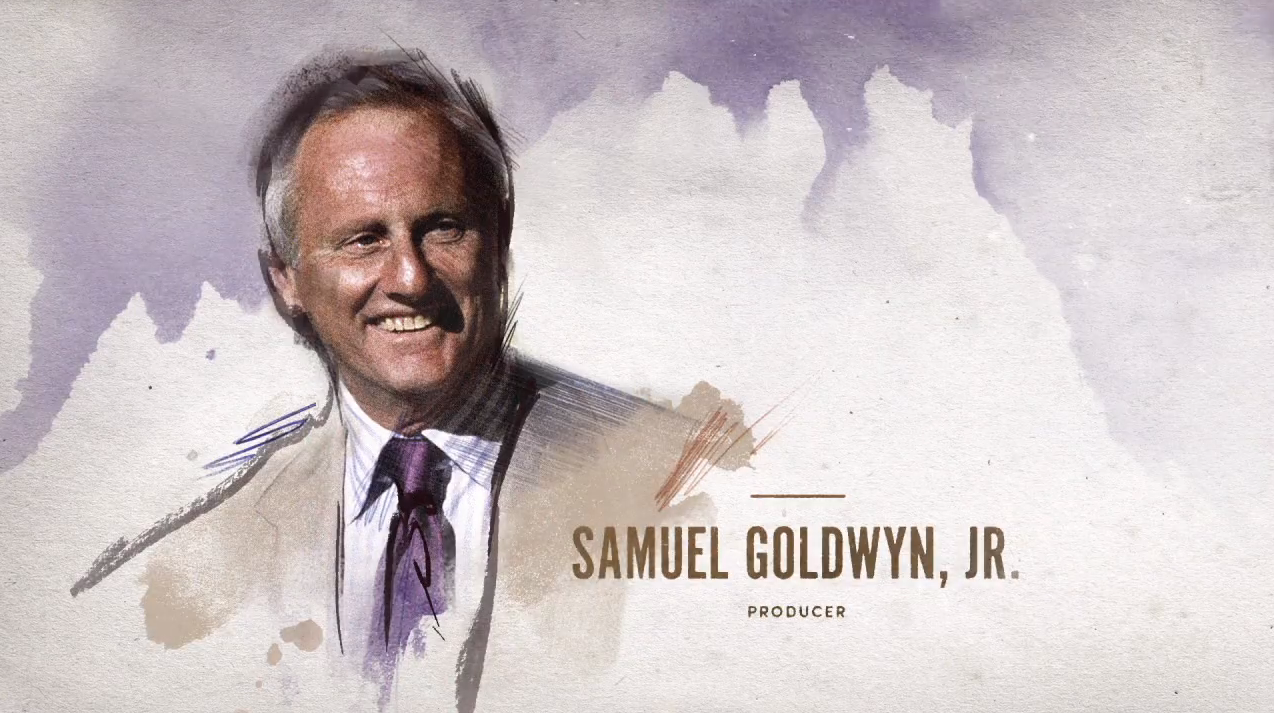
I can't hold up an Oscar or a Golden Globe and thank Sam like Jim and Julia. I can only point to a handful of produced credits and a stack of WGA receipts. Not all that impressive, so nobody seeing Sam's tribute in that auditorium would have cared what I think. The image of Sam that the Academy showed onscreen that night just listed him as a producer, but I knew it was more than that. I knew about all the other jobs he handled, one of them being life saver. And I think everybody in the auditorium knew it, too. Sam used to advise us, "Show it, don't say it." It was the best way to write a screenplay, and the best way to live a life... and he even demonstrated it. (That advice used to annoy the hell out of us until it saved us, too.) Rest in Peace, Sam, and thank you.
Samuel Goldwyn, Jr.: 1926 - 2015
by Once Bitten co-writer David Hines, January 10, 2015
Samuel Goldwyn, Jr.—the man who produced and financed our first film, Once Bitten—passed away today at the age of 88.
Shit.
You've heard me bitch about various aspects of my experience on Once Bitten, and no doubt will again.
But you've never heard me bitch about Samuel Goldwyn, Jr. While I certainly didn't always agree with him (as a snot-nosed 22-year old), I recognized that Mr. Goldwyn always treated us kindly and fairly. Frankly, Jeff and I still get royalty checks to this day because he saw to it.
He was a good and decent man to a couple of greenhorn screenwriters who I guarantee were more trouble than we were worth. He took a big gamble on us, didn't fire us when he had every right to after we turned in a terrible second draft, and gave us the experience of having written a movie that debuted at #1 at the box office. He gave us our start, our first credit, and an amazing experience. I'll always love him for that.
Safe journey, sir. And I'm really, really sorry I yelled at you at the Friar's Club that time.
But more than anything, thank you, thank you, thank you.
Samuel Goldwyn Jr. Dies at 88, by Carmel Dagan, Variety Staff Writer; January 9, 2015 8:52PM PT
Samuel Goldwyn Jr., the son of a fiercely independent-minded Hollywood mogul and the producer of many independent films in his own right including "Mystic Pizza" and studio hits including "Master and Commander," died Friday at Cedars-Sinai Medical Center in Los Angeles. He was 88. His son John Goldwyn told the New York Times he died of congestive heart failure.
Goldwyn Jr. received his final credit as a producer, together with son John and others, on Fox's long-gestating remake of the Goldwyn Sr.-produced classic "The Secret Life of Walter Mitty," starring and directed by Ben Stiller and released in December 2013.
The courtly and soft-spoken scion was known for shepherding independent and foreign films and got his start in documentary filmmaking, in contrast to his brash father, who made his way from a youth of poverty in Poland to a partner in MGM.
"I love it. If you don't love this business, don't go near it. Don't go near it to get rich," he told Britain's the Independent in 2004. "And just remember, if you're right 51 per cent of the time in this business, you're a genius."
As producer of the Peter Weir-directed "Master and Commander: The Far Side of the World" together with Weir and Duncan Henderson, Goldwyn Jr. shared that film's Oscar nomination for best picture in 2004. (The film received a total of 10 nominations and won two Oscars.)
After a failed merger and lawsuit resulting from MGM's acquisition of the distributor, Goldwyn Jr. relaunched his company as Samuel Goldwyn Films in the early 2000s. Though it was not nearly as active as the earlier incarnation, the new entity released indies such as "The Squid and the Whale," "2 Days in Paris" and "Robot & Frank."
In a 2004 New York Times profile, the tall, silver-haired Goldwyn was described as resembling not so much his father "as a combination of Kirk Douglas and Paul Newman."
But Goldwyn Jr. gloried in his father's achievements, eventually returning to live as an adult in the vast Beverly Hills estate built by his father and tending to the library of films. The films Samuel Goldwyn Sr. produced, including "The Best Years of Our Lives" and "Guys and Dolls," are handled by the Samuel Goldwyn Jr. Family Trust and currently licensed to Warner Bros. for U.S. distribution.
Sam Goldwyn Sr. was one of the pioneers of Hollywood, and his production company, Goldwyn Pictures Corp., became part of Metro-Goldwyn-Mayer in 1924, but Goldwyn Sr. had no involvement with MGM and was independent of the studio system after that.
Goldwyn Jr., however, did not "trade on his father's name," Tom Rothman, who began his career at the Samuel Goldwyn Company, told the New York Times.
Goldwyn Jr. grew up in Los Angeles as a self-confessed "Hollywood brat"—his mother was actress Frances Howard, he attended his first Oscar ceremony at age 11 and worked in editing rooms during summer vacation. He then spent a long period away from Los Angeles, attending prep school in Colorado and the U. of Virginia. After serving in the Army, he then took a job in England working for J. Arthur Rank, where he earned his first film credit as associate producer on the British crime thriller "Good-Time Girl," Diana Dors' first film, in 1948. Goldwyn Jr. rejoined the military in 1950, where he produced and directed documentaries for the staff of General Dwight D. Eisenhower. Back in the U.S., he worked under Edward R. Murrow at CBS News and co-produced docu series "Adventure."
When the young Goldwyn returned to Hollywood in the mid-1950s, Goldwyn Sr.'s career was in decline. In 1955 Goldwyn Jr. launched his production company Formosa Prods. (his father's Samuel Goldwyn Studio was located at the corner of Santa Monica Boulevard and Formosa Avenue) and produced his first film, uncredited, the same year: the Robert Mitchum Western "Man With the Gun."
Via Formosa Prods. he also produced "The Sharkfighters" (1956), "The Adventures of Huckleberry Finn" (1960) and, in the early 1970s, "Cotton Comes to Harlem" and "Come Back, Charleston Blue." Goldwyn Jr. directed one film, "The Young Lovers," starring Peter Fonda and Sharon Hugueny, in 1964.
In addition to his film work, Goldwyn Jr. produced the Academy Awards ceremony twice, in the late 1980s, winning an Emmy in 1988 for his effort.
His family's charitable contributions are evident throughout the city: Samuel Goldwyn Foundation sponsors the yearly Samuel Goldwyn Writing Awards, created the Samuel Goldwyn Foundation Children's Center day care facility, built the Academy of Motion Pictures theater and constructed the Hollywood Public Library in memory of Frances Howard Goldwyn.
He was married three times, to writer Peggy Elliott, with whom he had two children, and to actress Jennifer Howard, with whom he had four. He is survived by his current wife Patricia Strawn; four sons, producer John; actor Tony; Francis, and Peter, senior VP of Samuel Goldwyn Films; and two daughters Catherine, and Elizabeth; and nine grandchildren.
(Pat Saperstein contributed to this report.)
Liz Goldwyn Remembers When the Oscars Were Her Playground
Growing up as showbiz royalty, the filmmaker, artist, and writer remembers the days when she roamed the Oscars rehearsals with free rein.
by Liz Goldwyn for Vanity Fair; February 15, 2016
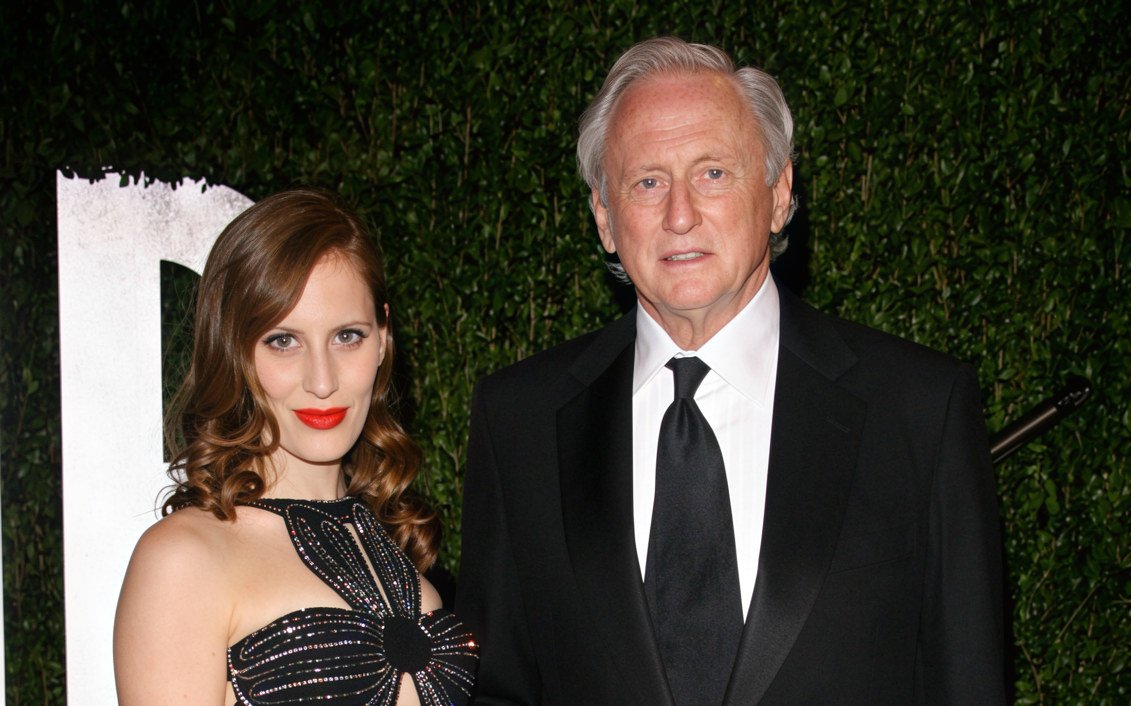
My father, movie producer Samuel Goldwyn Jr., produced the Academy Awards for two years running, in 1987 and again in 1988, for which he won an Emmy. He looked every inch the "Hollywood producer" in his Savile Row suits, a blue-and-white striped Turnbull & Asser shirt, 60s aviator glasses—a silver fox. I didn't yet have his sense of style. I was an awkward 10-year-old when he started rehearsals for the '87 awards—with a bad perm and too short bangs I'd cut myself. Hollywood was my backyard, not the high-school cafeteria run by the football team I would later know it to be.
My brother Peter and I treated the Dorothy Chandler Pavilion, in downtown Los Angeles, where the ceremony was held, as our personal playground; we ran rampant through the corridors and basement, up and down the lushly carpeted grand staircase, killing time while our father ran through the show. We had free rein to explore, as long as we didn't get in anyone's way or make trouble. Much of my childhood I remember like this—being in the most fabulous places with extraordinary people, more concerned with stealing sugar packets from dining tables and playing hide-and-seek.
Dad gave Peter and me autograph books to use during rehearsals, so we could collect the names of the nominees and presenters. It was a game for us—whoever collected the most achieved superiority. I still have mine—brown leather with gilt lettering, the pages now brittle and loose. I keep it on my bookshelf, a snapshot of an in-between time in Hollywood. The auditorium was filled with blockbuster stars of the day and the last of the golden-era leading ladies and men, who showed up for my dad to present on the show, out of respect for him and their long relationships with my grandfather—Samuel Goldwyn—with whom many of them had worked and played. Audrey Hepburn, Jennifer Jones, Gregory Peck, Elizabeth Taylor...
Peter and I were too young to know who these legends were—or to be intimidated by their star power. We were more interested in when RoboCop and Pee-wee Herman showed up for rehearsal. I look at family photos my mother took—Robin Williams giving Peter a noogie for good luck on the steps of the stage; me posed stiffly next to Oprah Winfrey in a dressing room—and cringe at how lucky and ignorant I was, but back then it was nothing more than visiting Dad at the office.
I had never seen my father nervous before—that is, until an old lady showed up for rehearsal. She was quickly ushered backstage. Dad pulled me aside and insisted I go with him to greet her. My father and I stood outside the closed door of her dressing room. He cleared his throat and hesitated before knocking. Entering, I was practically blinded by the bright lights surrounding her makeup mirrors. She sat with her back to us with an enormous jar of Pan-Cake makeup in front of her. She chatted with my father while scooping her hand into the jar, slathering foundation over wrinkled skin. I watched, transfixed, not adding much to the conversation. My father gave me a nudge and whispered, "Go on—ask for her autograph, Lizzie." I did what I was told, eager to get back out into the theater, worrying that Peter had already collected more signatures than I.
Almost bowing deferentially, my father and I exited, and he closed the door behind him. I could tell he was annoyed with my impatience. "Don't you realize that you were just in the presence of greatness? Show some respect." I looked down at my autograph book, at the looping Magic Marker scrawl, dumbstruck even now—"Hello to Liz, Bette Davis."
|